

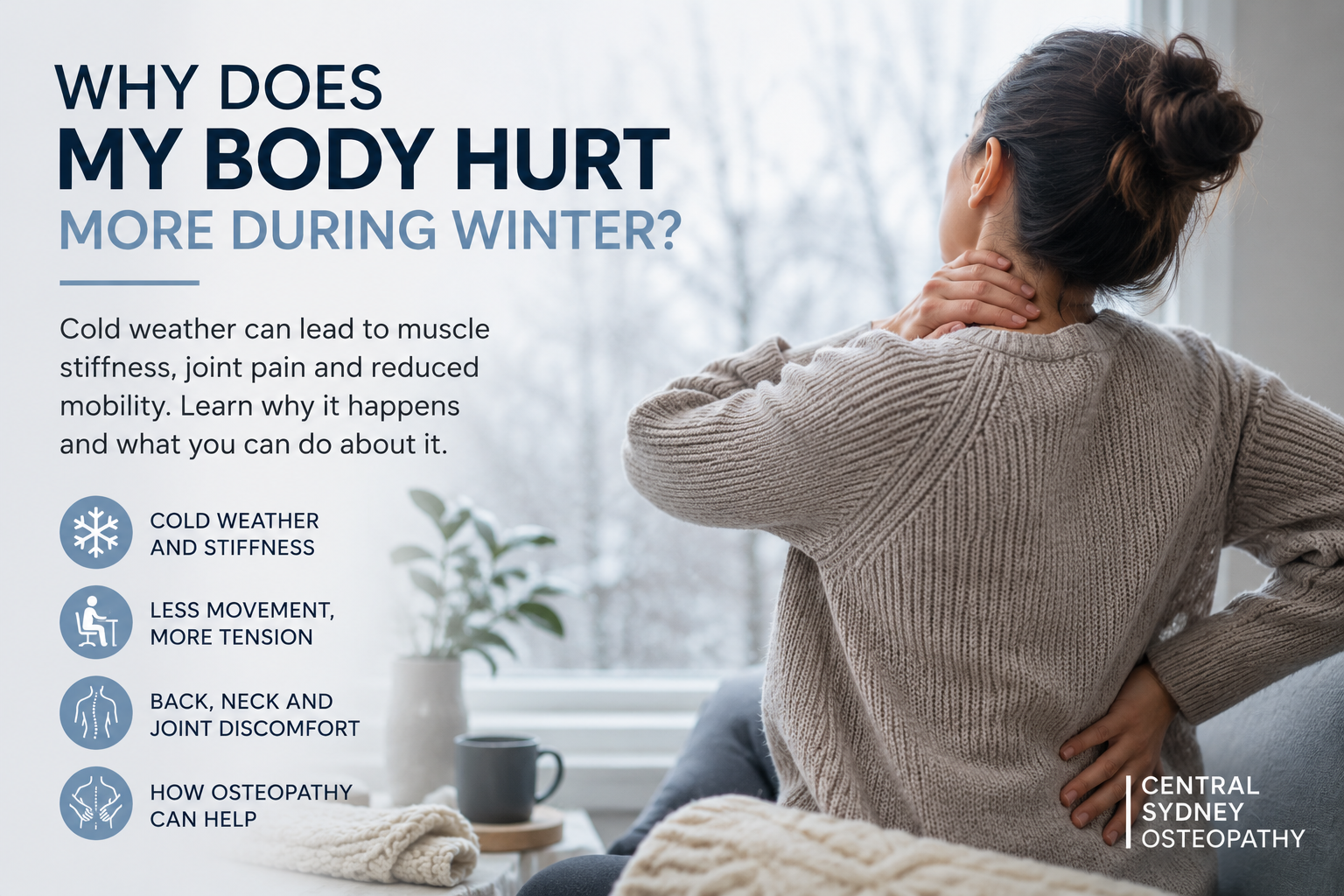
As the temperatures drop across Sydney, many people begin to notice familiar aches and pains returning. Whether it's a stiff neck when you wake up, sore joints after sitting for too long, or an old injury that suddenly starts bothering you again, winter can be a challenging time for your body.
While cold weather doesn't directly cause pain, it can contribute to muscle stiffness and make existing conditions feel more noticeable. The good news is that there are simple ways to reduce discomfort and keep your body moving well throughout winter.
Why Does Cold Weather Make You Feel Stiffer?
During colder weather, your muscles naturally tighten to help conserve body heat. This can reduce flexibility and make joints feel less mobile, particularly first thing in the morning or after sitting for long periods.
Winter also tends to change our daily habits. We often become less active, spend more time indoors, and exercise less frequently. These changes can lead to reduced circulation, tighter muscles, and increased stiffness, particularly in the neck, shoulders, lower back, and hips.
For people already living with conditions such as arthritis, previous sporting injuries, or chronic back pain, these seasonal changes can make symptoms feel more pronounced.
Common Winter Complaints
At Central Sydney Osteopathy, some of the most common issues we see during winter include:
- Neck and shoulder tension
- Lower back pain
- Hip stiffness
- Knee discomfort
- Headaches caused by muscle tension
- Reduced flexibility after inactivity
Many of these problems develop gradually and can often be managed before they become more serious.
What Can You Do at Home?
Fortunately, there are several simple habits that can help reduce winter aches and pains.
Stay Active
Even light movement makes a difference. A daily walk, gentle stretching, yoga, or regular exercise helps keep muscles warm and joints mobile.
Warm Up Before Exercise
Cold muscles are more prone to strain. Spending just five to ten minutes warming up before physical activity helps prepare your body for movement and reduces the risk of injury.
Improve Your Posture
Working from home, sitting under a blanket, or spending longer on the couch can all affect posture. Try to sit with good support, keep your computer screen at eye level, and take regular movement breaks throughout the day.
Keep Warm
Dressing in layers and keeping your muscles warm can help reduce tightness. A warm shower or heat pack may also provide temporary relief for sore muscles.
Don't Ignore Persistent Pain
Occasional stiffness is common, but pain that lasts for several days or continues to worsen shouldn't be ignored. Early treatment can often prevent minor issues from becoming longer-term problems.
How Osteopathy Can Help
Osteopathy focuses on improving the way your body moves by assessing the muscles, joints, ligaments, and surrounding tissues. Treatment is tailored to each individual and aims to reduce pain, improve mobility, and support the body's natural recovery.
Your osteopath may also provide advice on stretching, posture, workplace ergonomics, and exercises that help keep you comfortable between appointments.
Rather than simply treating the symptoms, osteopathy aims to identify and address the underlying cause of discomfort so you can continue enjoying your daily activities.
Don't Let Winter Slow You Down
It's normal to notice more aches and stiffness during the colder months, but you don't have to accept it as part of winter.
By staying active, looking after your posture, and seeking professional advice when discomfort persists, you can continue moving comfortably all season long.
If winter aches and pains are affecting your work, exercise, or everyday life, the team at Central Sydney Osteopathy is here to help.
Book an appointment today and let us help you stay mobile, comfortable, and active throughout winter.